


Inicio
>
Expert Guides & Installation Tips
>
Rod and Bar End Types: How to Choose the Right Connection

Rod and Bar End Types: How to Choose the Right Connection
por Maddison Mellem el Aug 18, 2025When it comes to wrought iron rods and bars, what’s on the end matters just as much as what runs through the middle. Whether you’re tensioning a timber truss, building a gate that won’t sag, or designing custom hardware for your home, the connection point—the end type—is where the job comes together.
At Old West Iron, we offer a range of forged and fabricated bar ends that match both function and form. Here's a breakdown of the most common types—how they’re used, where they shine, and how to know which one’s right for your project.
Shop Threaded Rods and Bar Stock »
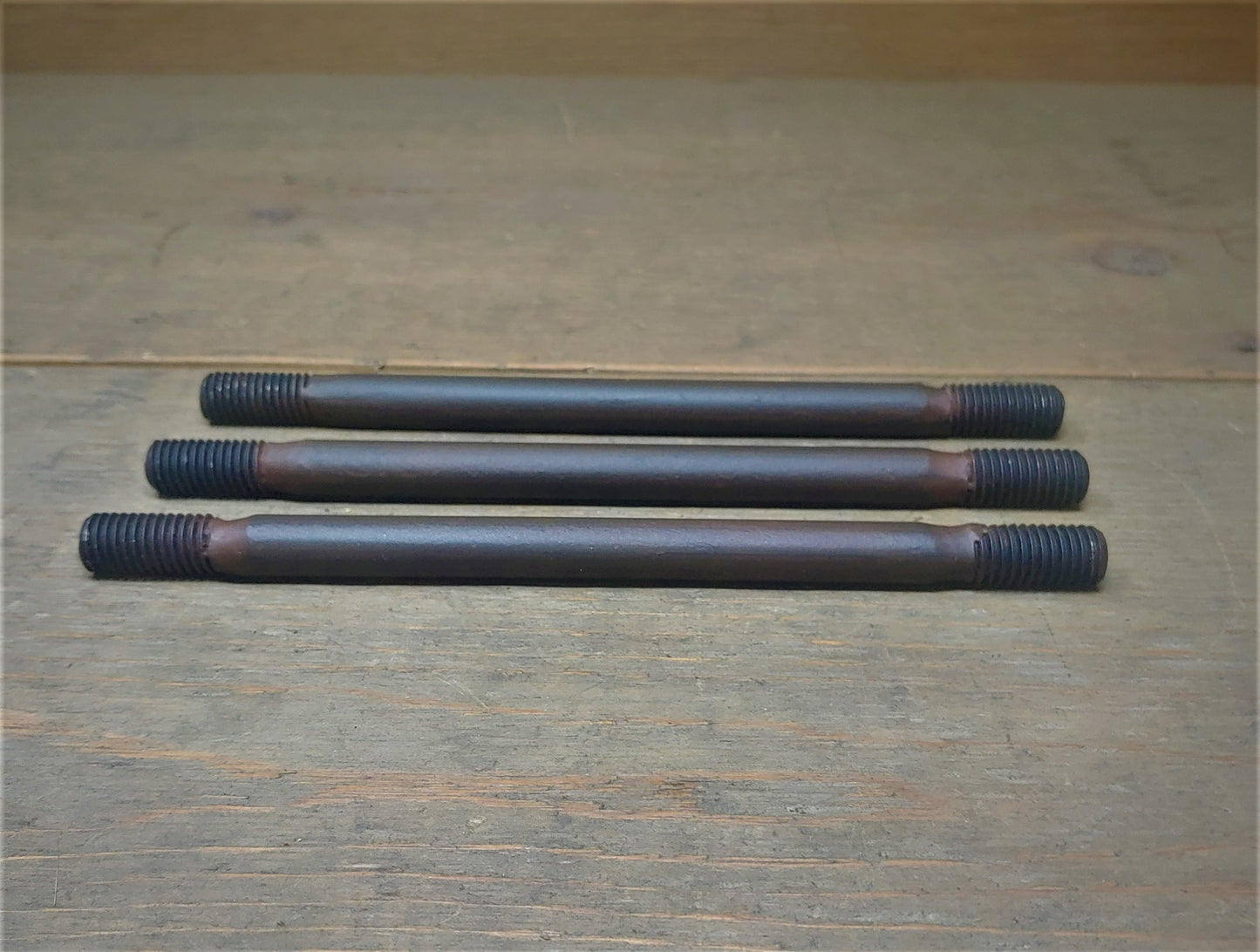
1. Threaded Ends: Versatile and Adjustable
What it is:
A rod or bar with machine-cut threads on one or both ends, designed to accept nuts, washers, or threaded hardware.
Best for:
-
Tensioning systems (trusses, tie rods, braces)
-
Custom turnbuckles
-
Anchoring into wood, concrete, or structural steel
-
Projects requiring fine-tuned adjustability
Why it works:
Threaded rod gives you control. It’s strong, modular, and easy to integrate into both new builds and retrofit work. Combine it with clevises, nuts, or decorative end caps for a clean, mechanical finish that doesn't compromise looks.

2. Tabbed Ends for Yokes or Clevises
What it is:
A flat, drilled steel tab (also called an eye tab or yoke tab) welded or forged onto the end of a bar, made to fit inside a clevis or bracket.
Best for:
-
Truss rods and tension ties
-
Gate assemblies
-
Ironwork that requires removable pin connections
Why it works:
Tabbed ends allow a bar to nest neatly inside a clevis jaw or matching bracket, secured by a through-pin or bolt. It's a solid, traditional connection—often seen in timber frame structures, bridgework, or period-correct architectural metalwork.

3. Flat Ends: Simple and Clean
What it is:
A bar or rod with a squared, non-threaded end—can be left solid or drilled for bolt-through connections.
Best for:
-
Welded assemblies
-
Decorative tension members
-
Clean finishes without hardware showing
Why it works:
Flat ends are the go-to when the connection is going to be welded, hidden, or purely decorative. They’re strong, simple, and clean—no fuss, no adjustment.

4. Through-Bolt Ends: Direct and Durable
What it is:
A drilled hole through a flat or round bar, allowing the rod to bolt directly to another component or surface.
Best for:
-
Structural tie rods in timber framing
-
Pergolas, pavilions, and beam braces
-
Anywhere a mechanical connection needs to pass through the rod
Why it works:
It’s direct and built for strength. If your hardware needs to be pinned in place and carry load in tension or compression, this type of end gets the job done with minimal parts.

5. Clevis Jaws: Functional and Forged
What it is:
A U-shaped fork at the end of a rod, with a hole through both "legs" to accept a clevis pin or bolt.
Best for:
-
High-tension applications
-
Timber trusses
-
Gates and movable connections
-
Traditional joinery with architectural ironwork
Why it works:
Clevis jaws are old-world strong. They pair with eye bolts, brackets, or yoke tabs to create a flexible but locked-in connection. Ours are made from solid steel and can be custom-sized to match your rod diameter and application.

How to Choose the Right End Type
Ask yourself:
-
What forces will the bar carry? Tension, compression, or decorative only?
-
Does the bar need to be adjustable or removable? Go threaded or tabbed.
-
Will it be seen or hidden? Let aesthetics guide your finish and hardware style.
-
Does it need to match historical or architectural styles? Clevis jaws and yoke tabs often offer the most period-authentic appearance.

Custom is What We Do Best
At Old West Iron, we build rod systems to spec—not off the shelf. That means your project gets the length, diameter, finish, and end type that fits your exact needs. And it’s all forged, welded, or fabricated in the USA by people who know their steel.
Need to talk through a design? We’ll help you spec out the right ends, hardware, and finish to make sure your structure stands strong—and looks sharp.
Explore Threaded Rods and Custom Iron Bar Stock »
Maddison Mellem
Writing from the forge at Old West Iron