


Accueil
>
Blog Old West Iron : Savoir-faire, héritage et expertise en ferronnerie d'art
>
Pourquoi Clavos ? Le clou décoratif aux racines historiques profondes

Pourquoi Clavos ? Le clou décoratif aux racines historiques profondes
par Maddison Mellem le Sep 04, 2025Ils sont petits. Souvent négligés. Faciles à sous-estimer. Mais si vous vous êtes déjà tenu devant une vieille porte espagnole, une malle sculptée à la main ou une porte de saloon battante qui a résisté à l'épreuve du temps, vous les avez probablement vus : les clavos.
Ces têtes de clous martelées sont plus que décoratives. Elles sont une fenêtre sur des siècles d'artisanat et de design interculturel. Et chez Old West Iron, elles restent l'un de nos accents les plus demandés pour les portes, les meubles et les restaurations.
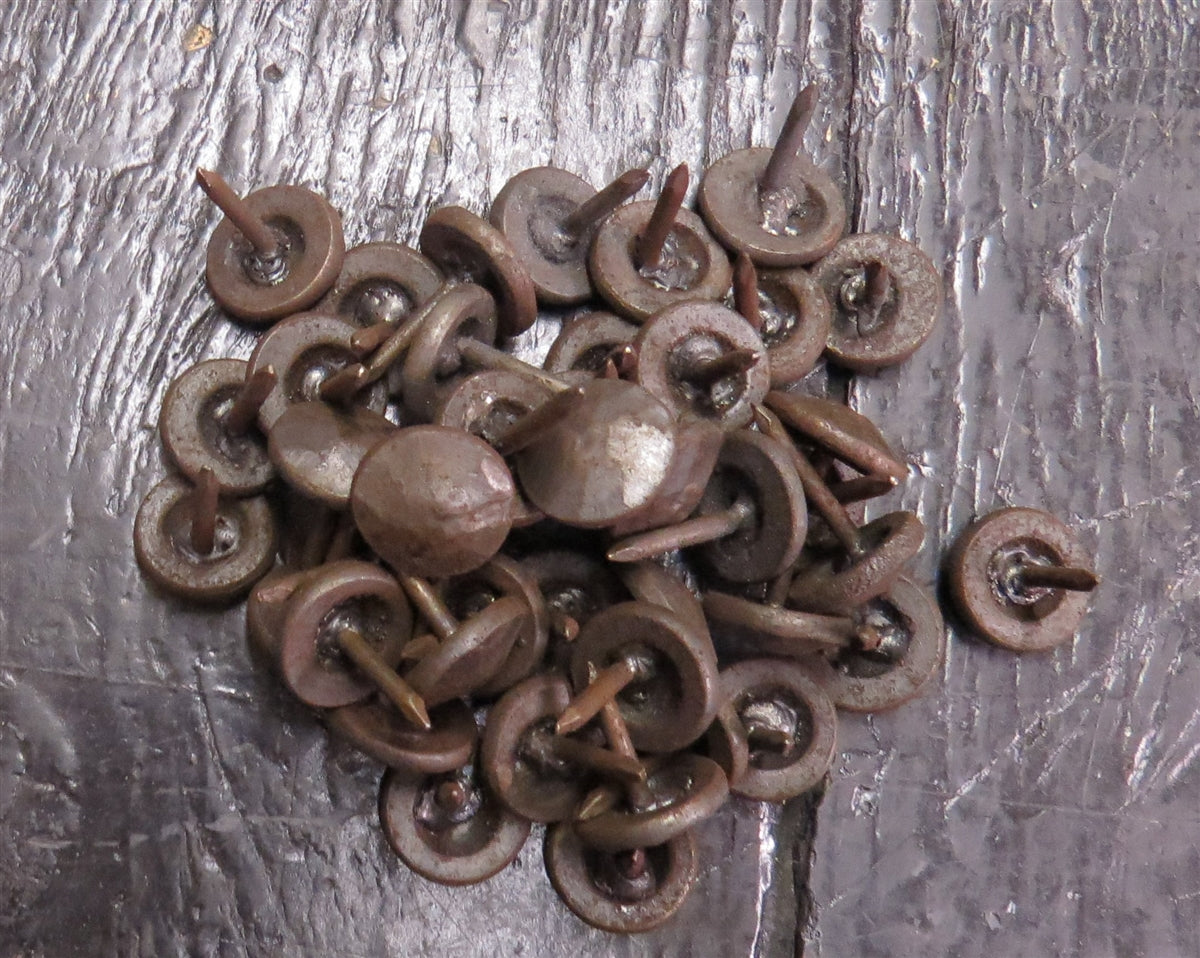
Que sont les clavos ?
En bref, les clavos sont des clous décoratifs, généralement avec de grandes têtes et souvent une finition martelée ou bombée. Le mot clavo signifie « clou » en espagnol, et historiquement, ils étaient utilisés à la fois pour des applications fonctionnelles et ornementales à travers l'Europe, l'Afrique du Nord, puis l'Ouest américain.
Aujourd'hui, les clavos sont populaires dans l'architecture rustique, mission, western et méditerranéenne, et pas seulement pour leur apparence. Ils ajoutent de la texture, de la symétrie et du savoir-faire à presque toutes les surfaces qu'ils touchent.
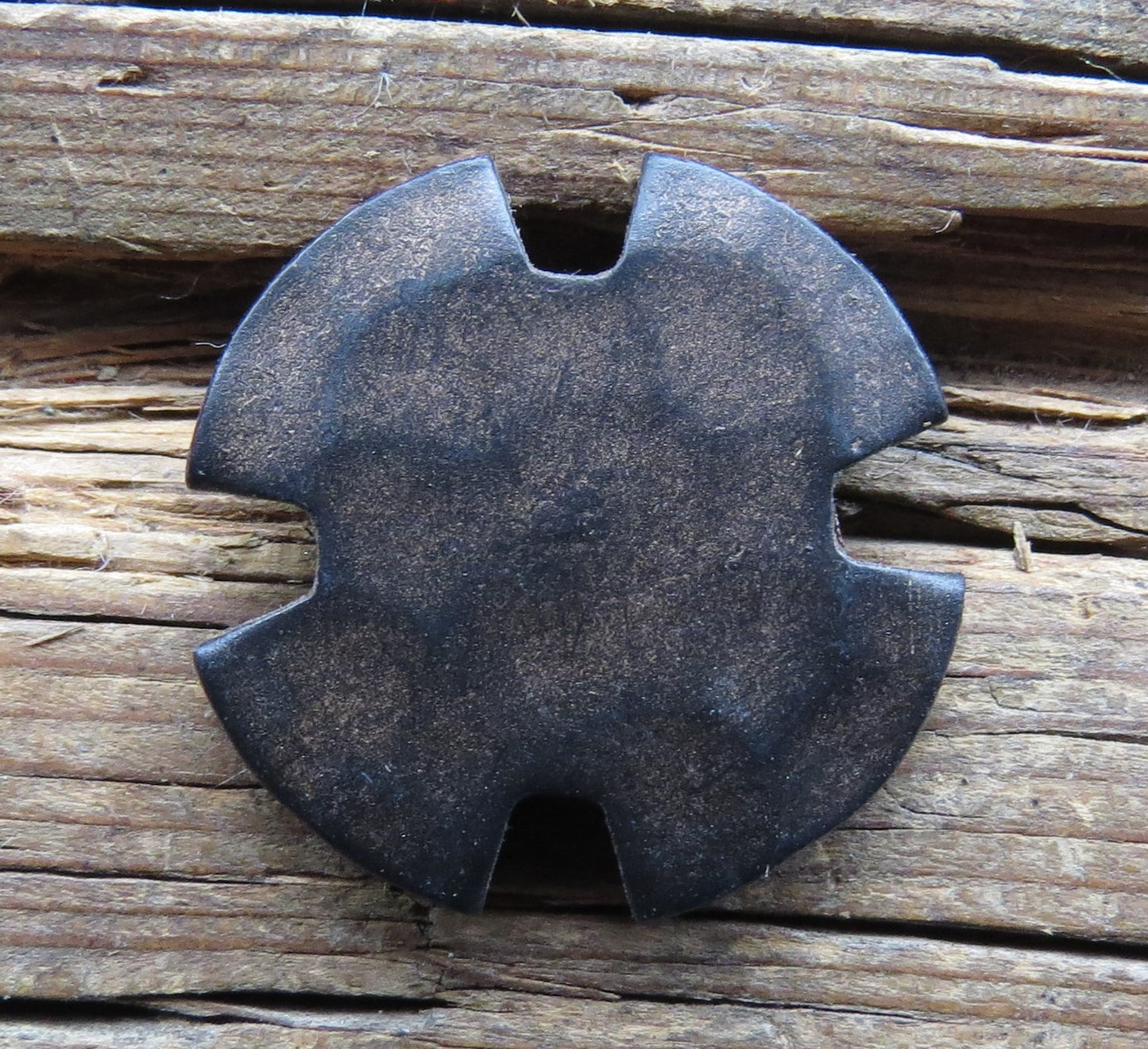
Origines anciennes : Espagne, Maroc et Méditerranée
La tradition des clous ornementaux remonte à l'Antiquité, mais elle a véritablement prospéré dans l'architecture espagnole et maure, où la ferronnerie audacieuse était un symbole de force et d'art.
Sur les portes de forteresse, les portails, les malles et les volets, les clavos :
-
Ajoutaient une couche de défense contre le siège et les intempéries
-
Renforçaient le bois lourd avec du fer
-
Signifiaient richesse et sécurité dans les designs de portes ornés
-
Étaient souvent forgés à la main comme des commandes spéciales pour les domaines et les villas
Alors que les colons et missionnaires espagnols apportaient leurs traditions de construction dans le Nouveau Monde, les clavos ont suivi, devenant une marque de fabrique de l'architecture coloniale espagnole.

L'expansion vers l'Ouest : les clavos à la frontière américaine
Avec l'avancée vers l'ouest aux XVIIIe et XIXe siècles, les premières fermes, ranchs et postes de traite avaient besoin de quincaillerie durable et disponible qui pouvait servir à la fois de fixation fonctionnelle et de détail décoratif.
Dans l'Ouest, les clavos étaient utilisés sur :
-
Les portes d'entrée des cabanes et des haciendas
-
Les coffres, les malles et les meubles
-
Les portes de saloon et les portails battants
-
Les bancs d'église et le mobilier d'autel
Ce n'étaient pas des produits fabriqués en usine. Ils étaient forgés un par un, martelés avec soin et faits pour durer aussi longtemps que le bois dans lequel ils étaient enfoncés.
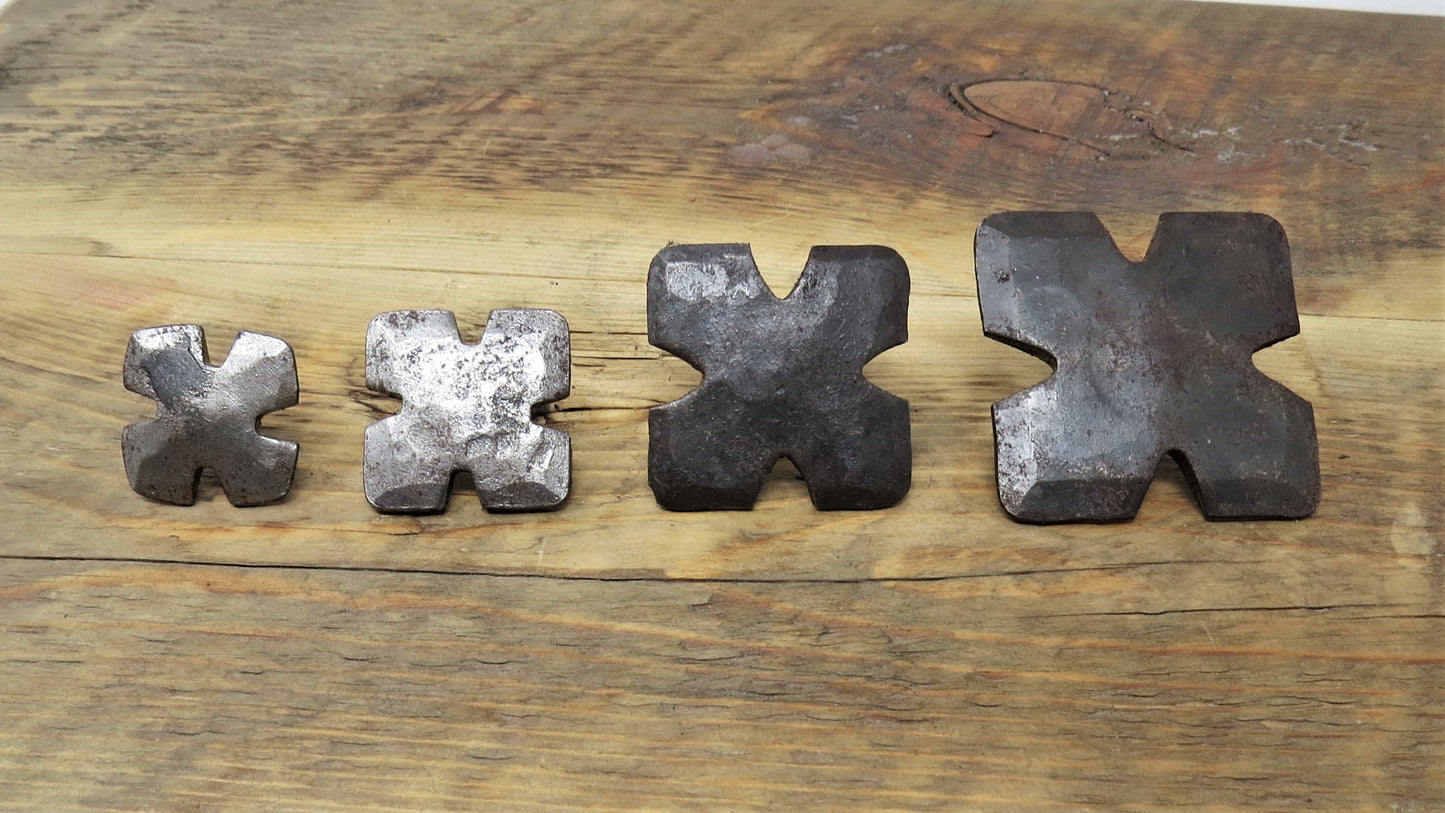
Usages modernes avec un caractère intemporel
Aujourd'hui, les clavos restent un détail distinctif dans les maisons et les bâtiments aux sensibilités occidentales, rustiques et du vieux monde. Que vous restauriez un ranch des années 1800 ou construisiez une entrée de style espagnol sur mesure, les clavos apportent :
-
Une authenticité historique
-
Un rythme visuel et de la profondeur
-
Un contraste de matériaux (fer ou bronze contre bois, cuir ou pierre)
-
Un sentiment de savoir-faire que l'on peut ressentir
Parcourir par style et finition »
Clavos Old West Iron : Forgés pour l'éternité
Chez Old West Iron, nos clavos sont forgés à la main, fabriqués aux États-Unis et disponibles dans une gamme de styles :
-
Formes de têtes rondes, carrées, pyramidales et martelées
-
Finitions comme l'huile noire, la patine bronze, le fer naturel et la cire d'abeille rouillée
-
Tailles pour tout, des portes de placard aux portails d'entrée grandeur nature
-
Matériaux incluant le fer forgé, le laiton, le bronze et le cuivre
Chacun est conçu pour être enfoncé dans le bois ou le rembourrage, et construit pour durer, tout comme les originaux.

Pourquoi choisir les clavos aujourd'hui ?
Parce qu'ils racontent une histoire.
Chaque clavo est un clin d'œil aux mains qui ont façonné le passé, aux forgerons, aux bâtisseurs et aux maîtres de maison qui savaient que même les plus petits détails comptaient. Dans un monde de raccourcis et de production de masse, les clavos sont la preuve qu'un design patrimonial ne se démode jamais.
Si vous travaillez sur un projet qui a besoin d'authenticité, d'art et d'un sens du lieu, les clavos pourraient bien être la touche finale.
Commencez avec notre collection complète de clavos décoratifs »
Maddison Mellem
Rédaction depuis la forge d'Old West Iron